
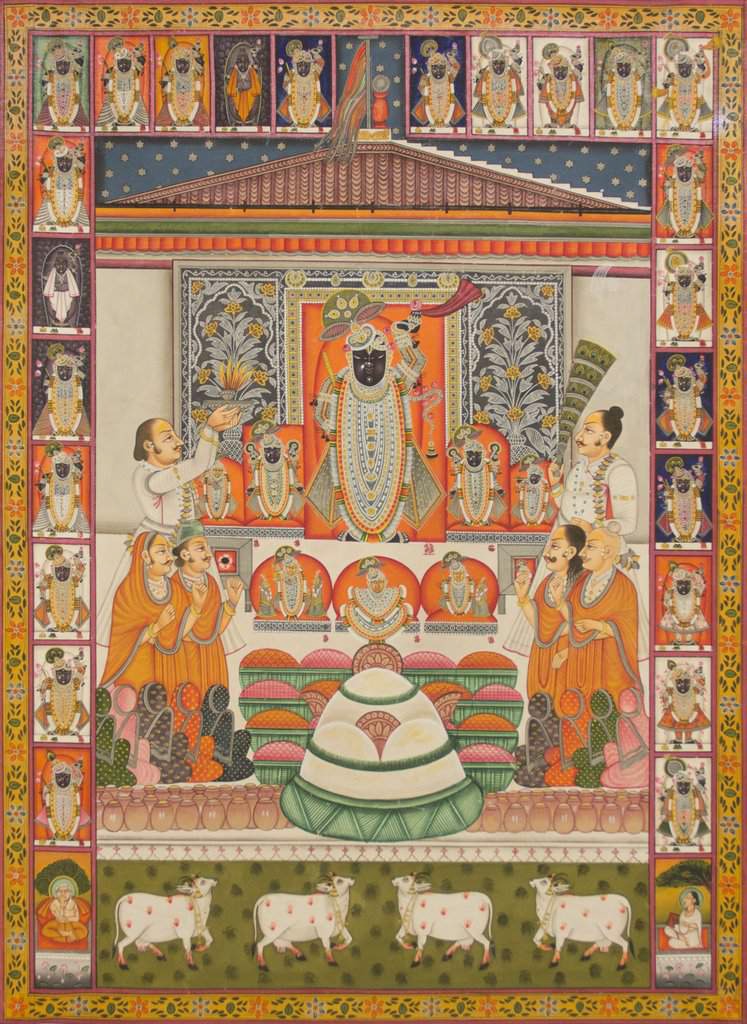
This image is a traditional Pichvaii painting depicting the sacred festival of Annakut (Govardhan Puja), one of the most important themes in Nathdwara Pichvaii art.
Description of the Painting
At the center of the composition is Shrinathji, a child form of Lord Krishna, standing majestically within a richly decorated temple shrine. He is adorned with heavy gold jewelry, garlands, and elaborate garments, emphasizing his divine presence. His iconic raised arm posture recalls the Govardhan Leela, where Krishna lifted Mount Govardhan to protect devotees.
In front of Shrinathji is a large, beautifully arranged mountain of food offerings (Annakut), made up of sweets, grains, and delicacies stacked in layered forms. This represents abundance, gratitude, and devotion offered to the deity.
Surrounding Figures and Details
Vaishnav devotees and priests are shown on both sides, standing with folded hands in prayer and reverence.
Smaller images of Shrinathji in different forms appear around the main shrine, symbolizing various sevas and manifestations.
The decorative architectural frame resembles a temple interior, reinforcing the ritual setting.
At the bottom of the painting, cows are shown peacefully walking, symbolizing prosperity and Krishna’s role as Govinda, the protector of cows.
The entire scene is enclosed within an ornate floral border, a hallmark of Pichvaii painting.
Artistic Features
Use of bright, rich colors such as orange, green, red, and gold
Flat perspective with intricate detailing
Symmetrical and well-organized composition
Fine ornamentation in textiles, jewelry, and food arrangements
Religious and Cultural Significance
Annakut Pichvaii paintings are traditionally displayed in temples after Diwali, celebrating devotion, community offering, and divine grace. The painting is not merely decorative; it plays a vital role in Vaishnav worship rituals and seasonal observances.