
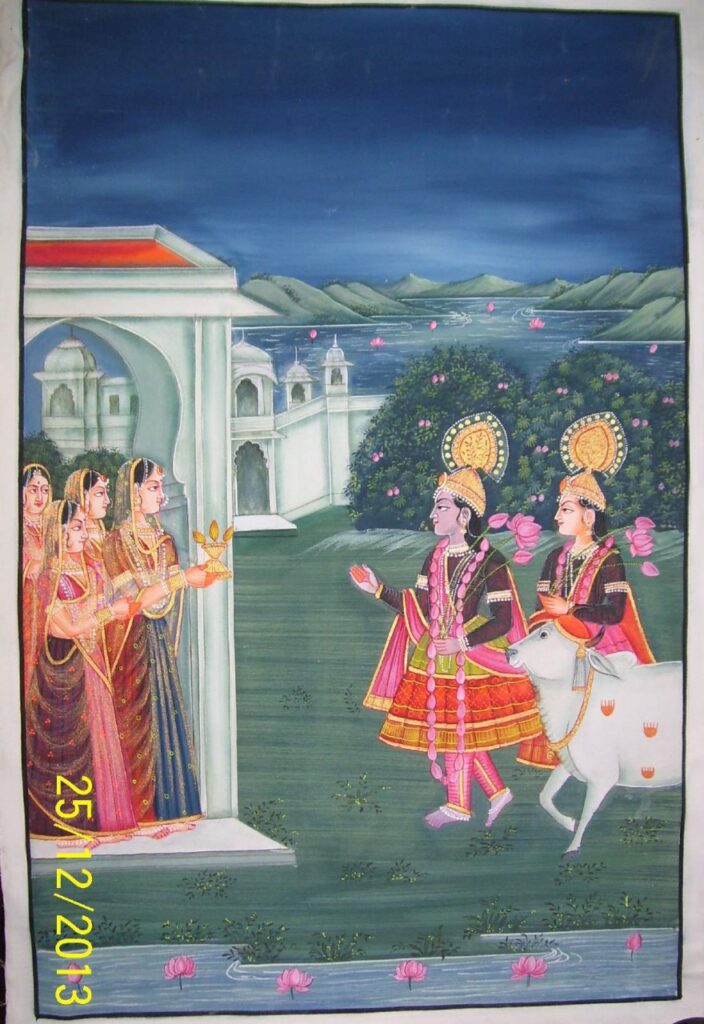
This image is a traditional Pichvaii painting depicting Lord Krishna (Shrinathji) arriving for darshan, accompanied by devotees and a sacred cow, set within a serene architectural and natural landscape.
Description of the Painting
On the right side of the composition, Lord Krishna is shown walking gracefully, dressed in richly ornamented garments of pink, red, and gold. He wears an elaborate crown and garlands, symbolizing his divine status. His gentle hand gesture conveys blessing and reassurance, a common feature in Pichvaii iconography.
Beside Krishna is a white cow, decorated with auspicious symbols. The cow represents purity, prosperity, and Krishna’s role as Govinda, the protector of cows.
On the left side, a group of women devotees (gopis) stand at the entrance of a palace-like structure, holding a lamp (aarti thali). Their posture and expressions reflect devotion, reverence, and anticipation, as they welcome Krishna with ritual worship.
Background and Setting
The scene is set near a river or lake filled with blooming lotus flowers, symbolizing purity and divine beauty.
Hills and water in the background create a calm, spiritual atmosphere.
The moonlit or twilight sky enhances the devotional mood.
Architectural elements such as arches and domes suggest a temple or palace, adding grandeur to the scene.
Artistic Features of Pichvaii
Use of flat perspective with fine detailing
Rich, vibrant colors and natural pigments
Intricate patterns in clothing and jewelry
Emphasis on decorative elegance rather than realism
Harmonious balance between figures, architecture, and nature
Religious and Cultural Significance
Such Pichvaii paintings were traditionally displayed in temples as backdrops during specific sevas or festivals. This scene reflects the personal relationship between the devotee and the divine, highlighting themes of welcome, devotion, and divine presence.