
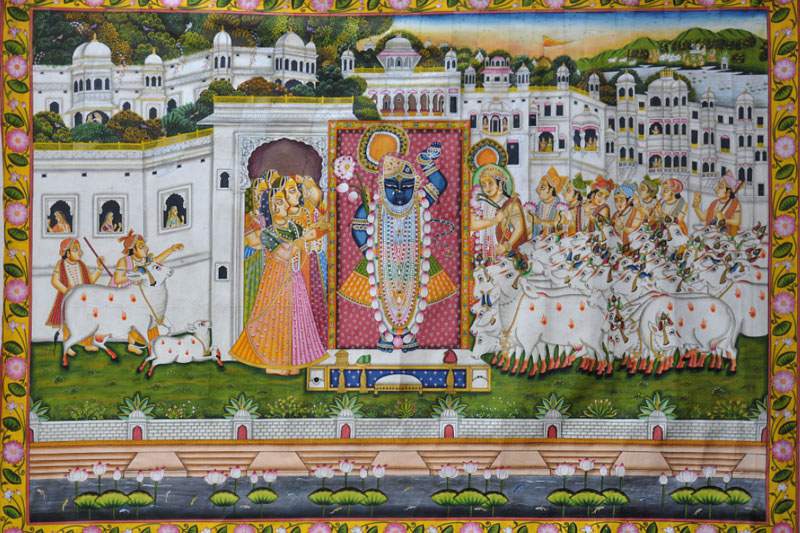
This image is a traditional Pichvaii painting depicting Shrinathji (Lord Krishna) in a grand ceremonial setting, surrounded by devotees, cows, and temple architecture, which is a hallmark of Nathdwara Pichvaii art.
Description of the Painting
At the center of the composition stands Shrinathji, shown in a richly decorated shrine. He is depicted with a dark blue complexion, adorned with heavy jewelry, garlands, and elaborate garments, symbolizing divinity and royal splendor. His posture and expression convey grace, protection, and blessing.
To one side, devotees and gopis are shown offering prayers and reverence, while on the other side a large group of cows and attendants appear in an orderly procession. The cows are carefully detailed and symbolize purity, abundance, and Krishna’s identity as Govinda, the protector of cows.
Background and Setting
The backdrop features magnificent white palace and temple architecture, resembling the temples of Nathdwara.
Hills and greenery in the distance create a sacred and serene atmosphere.
At the bottom, a water body with lotus plants symbolizes purity and spiritual renewal.
The entire scene is framed with a decorative floral border, typical of Pichvaii paintings.
Artistic Features
Symmetrical and well-balanced composition
Use of bright, natural colors with fine detailing
Flat perspective with emphasis on ornamentation
Intricate patterns in clothing, architecture, and animal forms
Clear narrative storytelling through visual arrangement
Religious and Cultural Significance
Such Pichvaii paintings were traditionally used as temple backdrops and displayed during festivals and special sevas. This scene reflects themes of devotion, prosperity, divine presence, and ritual worship, central to the Pushtimarg Vaishnav tradition.