
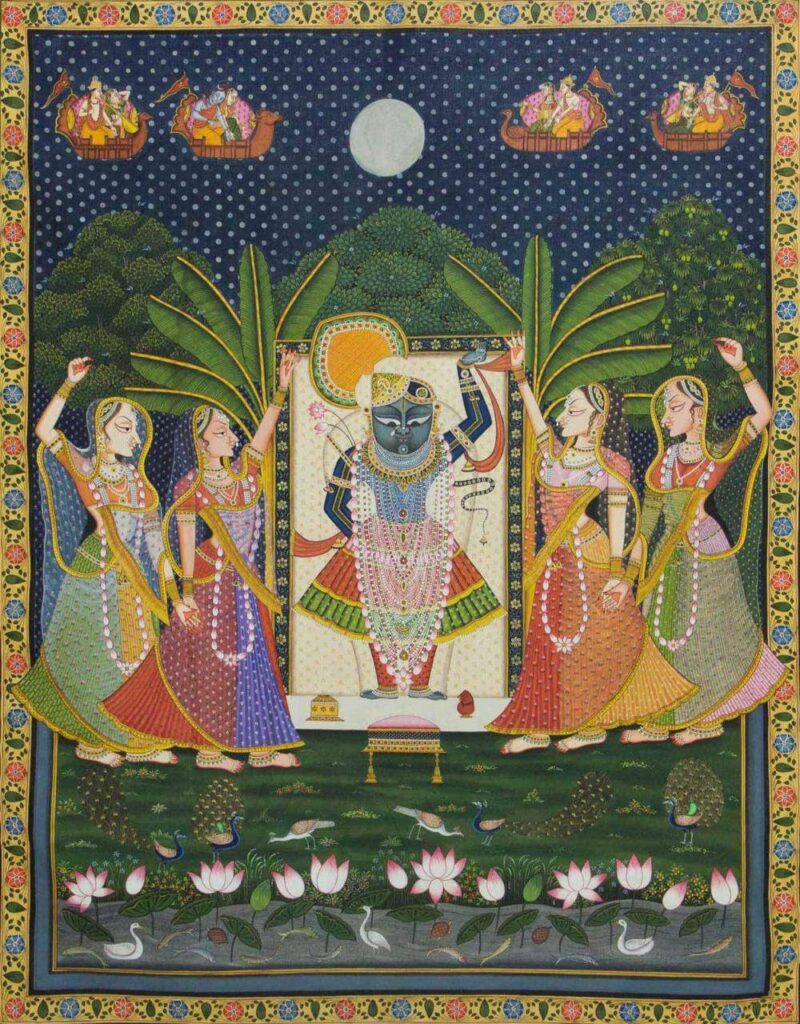
Traditional Pichvaii painting depicting Shrinathji (a form of Lord Krishna) worshipped by gopis in a serene, moonlit setting. It reflects the devotional and symbolic richness of Pichvaii art from Nathdwara, Rajasthan.
Description of the Painting
At the center stands Shrinathji, shown as a dark-complexioned divine figure, richly adorned with ornate jewelry, garlands, and colorful garments. His iconic raised arm posture symbolizes Govardhan Dharan, representing divine protection and grace. Shrinathji is placed within a decorated shrine-like frame, emphasizing his central importance.
Surrounding him are gopis, gracefully dancing and worshipping with raised hands. Their flowing ghagras, veils, and jewelry are painted in vibrant reds, greens, yellows, and blues, displaying fine detailing and rhythmic movement.
Background and Symbolism
The full moon and star-filled night sky suggest a sacred and festive occasion, possibly Sharad Purnima or a night seva.
The boats in the sky carrying divine figures symbolize celestial presence and celebration.
Banana trees and lush greenery represent fertility, abundance, and Vrindavan’s sacred landscape.
Lotus flowers, swans, peacocks, and birds at the bottom symbolize purity, devotion, and divine beauty.
Artistic Features of Pichvaii
Use of natural colors with rich tones
Intricate detailing in textiles, ornaments, and borders
Flat perspective with decorative emphasis
Elaborate floral borders, a hallmark of Pichvaii painting
Symmetrical and balanced composition enhancing devotional focus
Religious and Cultural Significance
Such Pichvaii paintings were traditionally hung behind the idol of Shrinathji in temples and were changed according to season, festival, or time of day. This painting is not merely decorative; it is an essential part of Vaishnav bhakti tradition, enhancing spiritual experience during worship.