
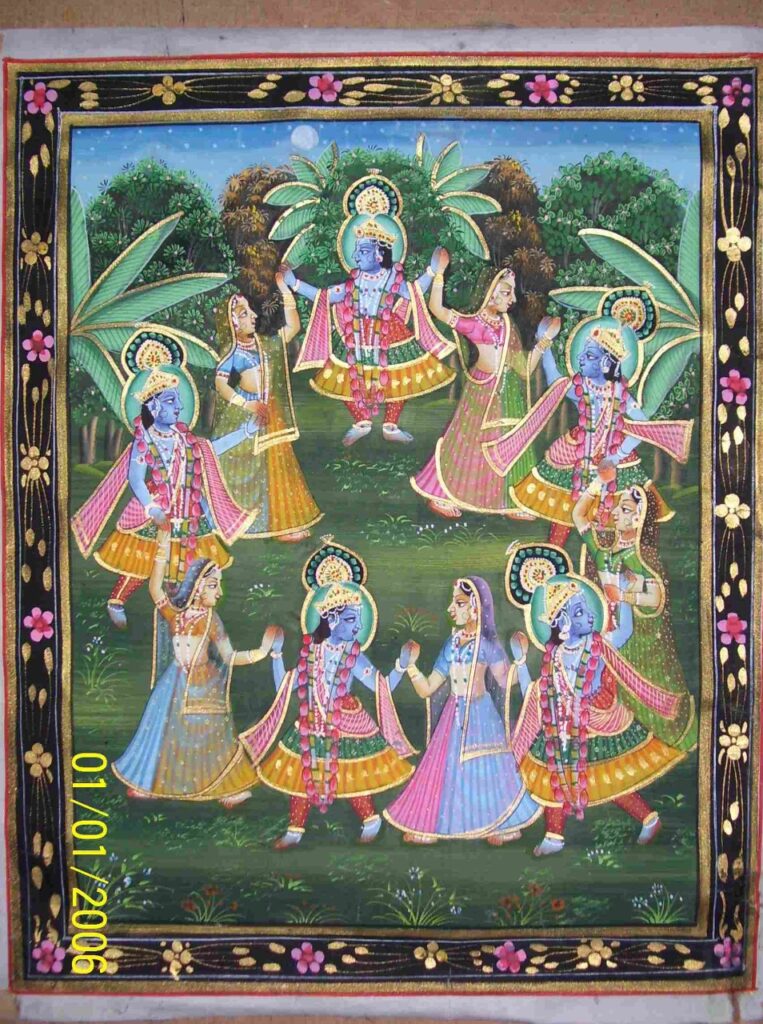
A popular and sacred theme in Vaishnav art.
Description of the Painting
At the center and throughout the composition, Lord Krishna is shown dancing joyfully with the Gopis in a lush green forest setting. Krishna is depicted with blue skin, symbolizing divinity, and is adorned with elaborate jewelry, floral garlands, and richly decorated garments. Each figure is shown in rhythmic dance postures, creating a sense of movement and celebration.
The Gopis are dressed in brightly colored lehengas and odhnis, painted with delicate detailing and ornamentation. Their graceful gestures and expressive faces convey devotion, love, and spiritual joy.
Artistic Features
Symmetrical and balanced composition, typical of Pichvaii painting
Use of rich, vibrant colors such as green, blue, pink, and gold
Fine detailing in costumes, jewelry, and facial expressions
Decorative floral borders framing the painting
Flat perspective with emphasis on ornamentation rather than realism
Symbolism
Raas Leela symbolizes the divine love between Krishna and his devotees
The forest and trees represent Vrindavan, the sacred land of Krishna
Multiple Krishnas emphasize the belief that the divine is present with every devotee simultaneously
The dance signifies spiritual bliss, harmony, and union with God
Cultural and Religious Significance
Such Pichvaii paintings were traditionally used as temple backdrops in Nathdwara and other Krishna temples. They were displayed during specific festivals and seasons to enhance the devotional atmosphere. The painting is not merely decorative but plays an important role in bhakti (devotion).