
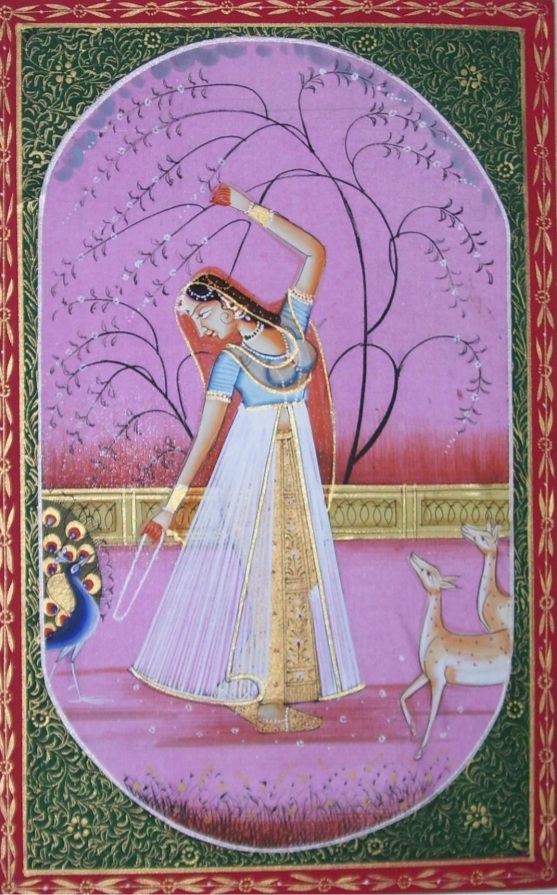
Ragini painting, belonging to the Ragamala tradition of Indian miniature art. It visually represents the mood and emotion of a ragini through a graceful female figure and symbolic elements of nature.
Description of the Painting
The central figure is a young woman shown in an elegant dancing posture. Her raised arm and gentle bend of the body express rhythm, grace, and musical movement, suggesting that she is absorbed in melody and emotion. This feminine figure symbolizes a ragini, which in Indian classical music is considered the female counterpart of a raga.
She is dressed in traditional attire with soft flowing garments, delicate jewelry, and refined facial features—typical characteristics of Ragamala paintings. Her calm yet expressive face reflects bhava (emotion), an essential element of both music and art.
Symbolism and Elements
The deer symbolizes gentleness, sensitivity, and emotional longing.
The peacock beside her represents beauty, rhythm, and the monsoon mood, often associated with romantic or devotional raginis.
The flowering tree and natural landscape enhance the lyrical and poetic atmosphere of the painting.
The arched frame and decorative borders are characteristic of Indian miniature painting styles, especially from Rajasthan or Pahari regions.
Mood and Meaning
This Ragini painting conveys a sense of love, devotion, and musical harmony. The dancer’s movement appears synchronized with an unseen melody, transforming sound into a visual experience. The painting does not depict a literal musical performance but rather the emotional essence of the ragini.
Artistic Significance
Ragini paintings were traditionally created to help viewers understand the time, season, and emotion of a musical composition. They combine music, poetry, and painting into a single expressive form, reflecting India’s belief in the unity of art forms.